
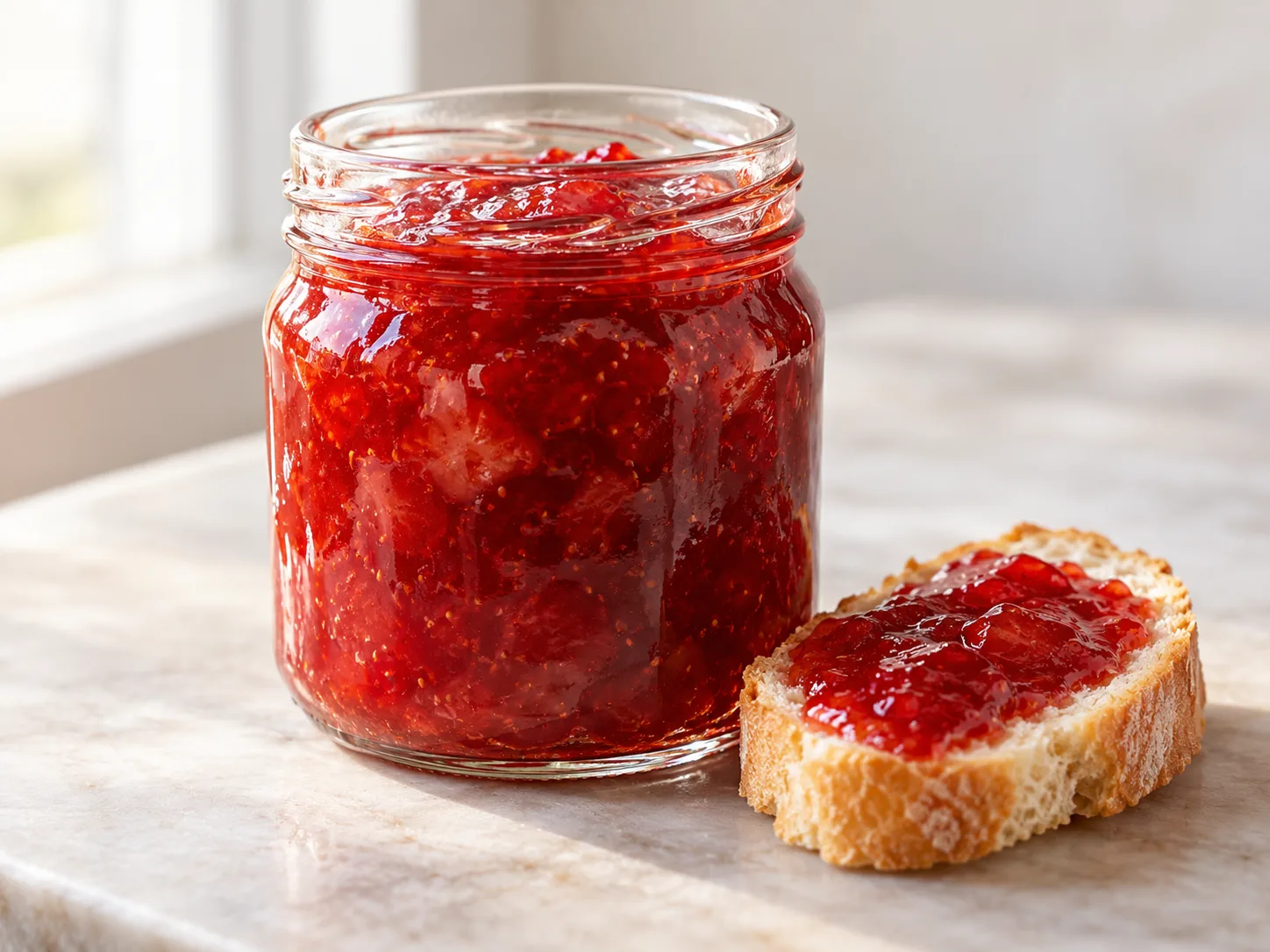
private label jam Saudi Arabia is a practical purchasing decision about private-label fruit jam, not a claim that the category is automatically popular. Buyers considering breakfast spreads, pastry fillings and premium retailer-owned assortments need an item that behaves predictably in a particular recipe and arrives with verifiable documentation. For a retailer-owned brand, formula approval and packaging approval are distinct responsibilities. A category named on the Neom Gardens website does not confirm a specific recipe, pack, certification, manufacturing service or commercial price. Those points must be confirmed directly with its team. An accountable buyer should record why each product is selected.
Begin with the intended customer rather than a product photograph. The use case here is breakfast spreads, pastry fillings and premium retailer-owned assortments. Write down three actual serving situations, the likely portion size, the frequency of opening a pack and the equipment available. Ask kitchen staff or store buyers to explain what information they need to use the item correctly. Their comments can expose ambiguous labels, but they do not establish national sales demand. Start with a manageable number of samples. Do not assume the largest pack or the most colourful presentation will work best for every customer.
Build a product specification sheet before asking for a commercial quotation. Capture the exact name, ingredients, net amount, batch identification, packaging material, storage directions and the supporting document for each attribute. Important distinctions for private-label fruit jam include fruit identity, fruit-piece texture, sweetening ingredients, gelling system and stability after controlled baking. Ask who produced the data and whether it applies to the submitted sample. Compare alternatives in equivalent units and similar intended uses; superficially similar packages may have very different technical performance.
Test the actual food in a repeatable way. For private-label fruit jam, compare measured jam on toast, then bake the same quantity in a pastry and document leakage or consistency. Use the same tools, timing, preparation conditions and serving weight in every comparison. Let the chef and the purchasing manager provide independent observations rather than an overall impression alone. Record taste, texture, dispensing and whether the finished recipe meets the intended purpose. Re-run the trial if the conditions differ. Taste is not a laboratory safety test and does not prove shelf life, legal compliance or manufacturing controls. Those matters need appropriate technical evidence from qualified parties.
Calculate useful servings rather than judging only the amount printed on a container. In this case, record usable jam per jar, sticky residues and finished portions in both breakfast and bakery uses. Write down what was opened, used, wasted and left over under realistic conditions. A unit that seems inexpensive by weight may generate more waste if a small kitchen cannot finish it according to its storage directions. Compare the operational time needed to open, dose and clean the pack. Use a current written quotation when estimating costs; do not invent prices or claim a commercial saving before checking actual numbers.
Inspect packaging as a working tool as well as a consumer presentation. Practical choices may include small jars or other compatible packs with clear ingredient information and enough space for Arabic text. Check the closure, readability, leakage risks, transport protection, case dimensions and instructions for storing the food once opened. Packaging materials must be appropriate for the specific product and process. Confirm availability of proposed alternatives with the supplier instead of presenting a design mock-up as a stocked item. Keep the sample packaging and its dated specifications in the purchasing record so later shipments can be compared against the approved reference.
Review the requirements of the destination market for each actual formulation. SFDA confirms Arabic packaging information is necessary and that additional-language information must be equivalent; the actual jam formulation needs its own assessment. A responsible business must check the precise ingredients, net quantity, allergens when applicable, responsible-operator information and any nutritional, origin or certification statements. An official general guide is a starting point, not approval for an individual product. Where an ingredient, processing method, packaging or destination changes, the affected product information and artwork should be checked again by the appropriate specialist before launch.
Competitor research offers context but cannot establish market share. Al Alali's Saudi-facing catalogue shows strawberry jam and its use as spread or dessert ingredient. The editorial opportunity is a dual breakfast-versus-bakery evaluation alongside an Arabic label acceptance process. This is a useful proposed way to answer real purchasing questions, not proof that a competitor lacks all such information. Avoid copying the company's text or claiming a specific ranking, search volume or sales performance. Evaluate whether your own planned guide shows a buyer what to measure, what to request and what to verify before committing to a purchase. Keep the URLs and observation dates with the research notes.
Send a written supplier brief for the exact item. For private-label fruit jam, separate recipe and artwork approval, confirm traceability, label translation and changes, and ask for samples from actual production. Specify the destination country, channel, intended use, estimated handling pattern and any mandatory label details. Ask about batch traceability, how complaints are recorded and how formulation or material changes will be communicated. Treat order minima, certifications, lead times and prices as questions until the actual supplier answers them in writing.
The final decision should connect the approved sample, technical sheet, packaging proof and consumer label to the same product. a dual breakfast-versus-bakery evaluation alongside an Arabic label acceptance process can become an explicit acceptance test rather than a promotional slogan. Name the person responsible for evaluating it, preserve the results and retain the relevant version numbers. When the next batch arrives, compare its documented features and performance with the original decision. The aim of private label jam Saudi Arabia is a reliable product fit backed by evidence, not a generic claim of superiority. Any unconfirmed Neom Gardens offering must remain a question rather than a promise.